
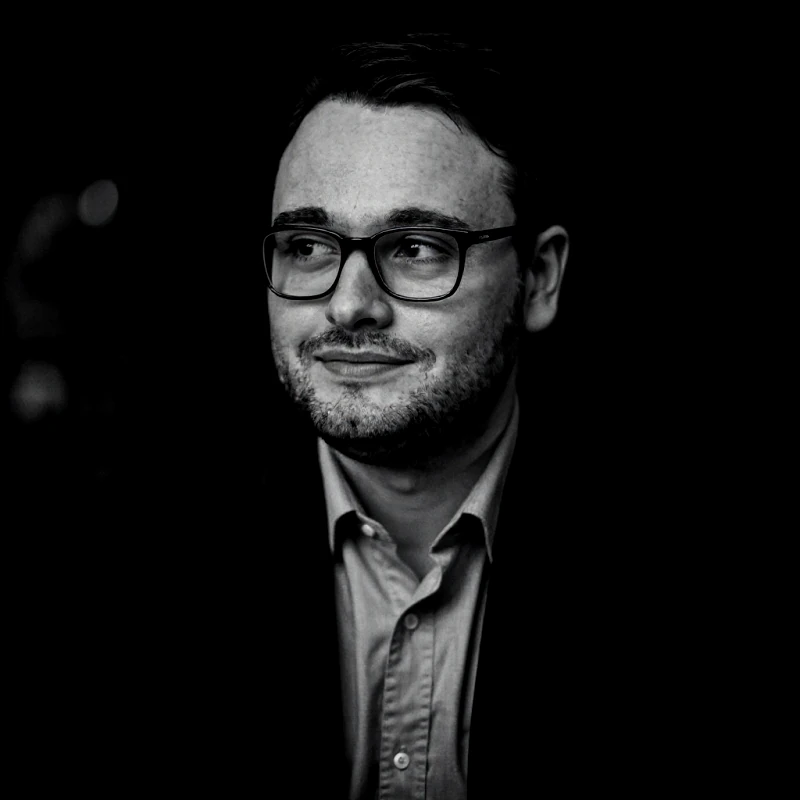
Jamie
Del Grosso
Kind Machines is a studio of one. I build it to stay close to the craft: taking genuinely hard problems and turning them into software a person actually wants to use.
Founder
A one-person software product studio. Designed, built and shipped by me.
Co-founder & CPO
A space and defence technology company building quantum-secure infrastructure.
CEO
A marketing and digital delivery consultancy for companies in complex industries.
A studio of one
Kind Machines is a one-person studio. Every machine on this site was designed, built and shipped by me, and that is deliberate. A studio of one has nowhere to hide. Every decision is mine, every detail is my responsibility, and nothing ships that I would not put my own name to. It keeps the work honest.
The two day jobs
I do not do this instead of a career. I do it alongside two of them.
I am co-founder and CPO of Pan Galactic, a space and defence technology company building quantum-secure infrastructure, and CEO of Gravitas, a marketing and digital delivery consultancy that helps companies in complex industries communicate as clearly as they operate. Both roles live at the hard end of things: dense problems, real stakes, and people who have no patience for tools that get in the way.
Why Kind Machines exists
Running two companies, it would be easy to drift away from the craft that got me here: sitting with a difficult problem and turning it into something a person can actually use. So I built a studio to force the issue.
Kind Machines is where I keep my hands dirty. It is a place to push and test myself as a product designer, to stay fresh in my other roles, and to keep exercising the skill I care about most: taking complexity and making it feel simple. It is a workshop as much as a business, and I like it that way.
Human-first, always
Everything I have learned across space, defence and marketing points at the same conviction. The best software respects the person on the other side of the screen. It is fast, honest, and quiet, and it never makes you feel foolish for using it. That is what a kind machine is: not soft, but considered. Built by someone who had to understand the problem all the way down before daring to make it look easy.
Say hello
Kind Machines is small on purpose, and it will stay that way. If something here resonates, or you simply want to compare notes on hard problems and human-first design, I would genuinely like to hear from you.